Note
Using 持って いる suggests that the condition or disease is chronic, whereas かかって いる is neutral with respect to duration.
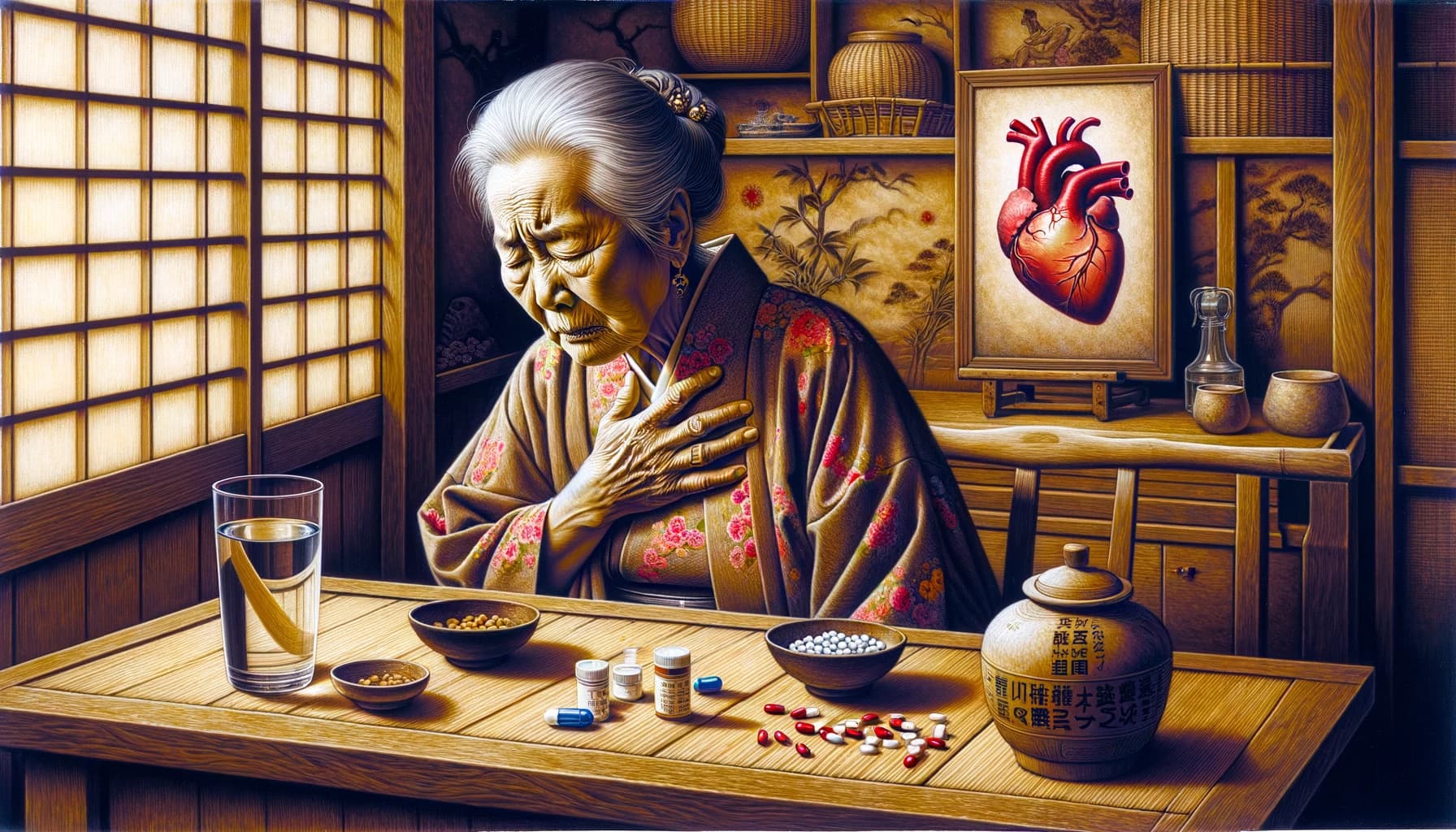
Breakdown of kanozyo no sobo ha kokoro no byouki wo motte imasita.
はha
topic particle
のno
possessive case particle
をwo
direct object particle
彼女kanozyo
she
心kokoro
heart; spirit, mind, soul
持つmotu
to carry; to hold; to take; to have
祖母sobo
grandmother
祖母 is a formal alternative for grandmother. You might encounter this word in written contexts or official documents. In most contexts it's advised to use お婆さん instead, as it sounds more friendly and respectful.
〜て いる〜te iru
grammar for indicating an ongoing state or action
病気byouki
sickness, illness, disease
Learn kanozyo no sobo ha kokoro no byouki wo motte imasita and more in Japanese
All course content and exercises are completely free — no paywalls, no trial periods, no signup needed.
- ✓ Practice with interactive exercises
- ✓ Track your progress with spaced repetition
- ✓Learn at your own pace — completely free