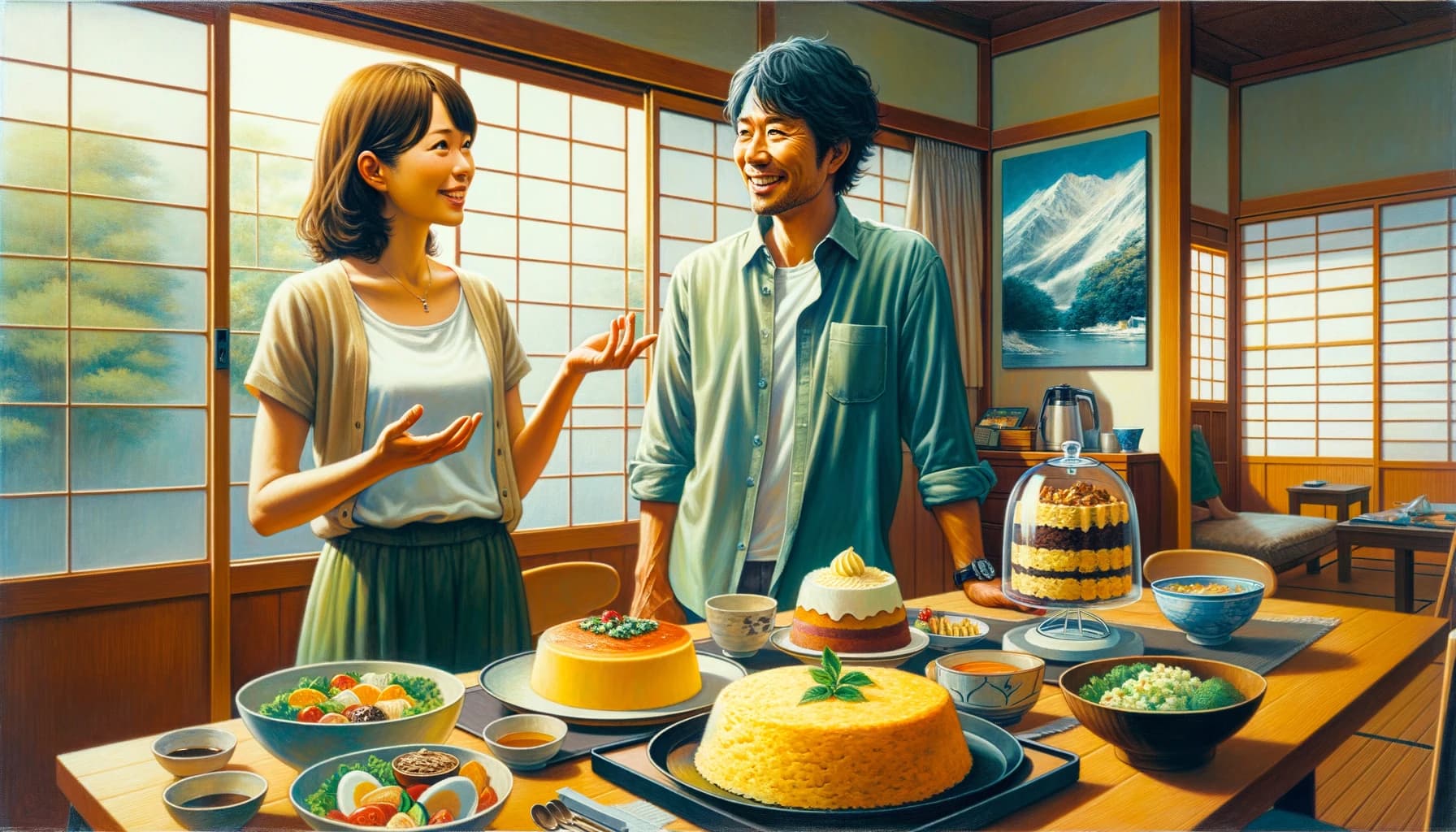
Breakdown of 「bangohan ha nani ga aru?」 「omuraisu to sarada to sorekara keeki da.」
はha
topic particle
何nani
what
がga
subject particle
あるaru
to exist; to have; (used for non-living entities)
とto
and; or; with
晩ご飯bangohan
dinner
晩ご飯 is more commonly used than 夜ご飯.
だda
to be
サラダsarada
salad
ケーキkeeki
cake
それからsorekara
and; and then; since then
オムライスomuraisu
omurice; fried rice wrapped in an omelette
Learn 「bangohan ha nani ga aru?」 「omuraisu to sarada to sorekara keeki da.」 and more in Japanese
All course content and exercises are completely free — no paywalls, no trial periods, no signup needed.
- ✓ Practice with interactive exercises
- ✓ Track your progress with spaced repetition
- ✓Learn at your own pace — completely free