Usages of kaze
風 は 西 から 吹いて いる。kaze ha nisi kara huite iru.
The wind is blowing from the west.
風 は 高まって いる。kaze ha takamatte iru.
The wind is increasing.
風 が 強く 吹いて いました。kaze ga tuyoku huite imasita.
The wind was blowing strongly.
窓 から 風 が 入って くる。mado kara kaze ga haitte kuru.
Wind is coming in through the window.
キャンドル の 火 が 風 で 消えた。kyandoru no hi ga kaze de kieta.
The candle flame was extinguished by the wind.
涼しい 風 が 吹いて います。suzusii kaze ga huite imasu.
A cool breeze is blowing.
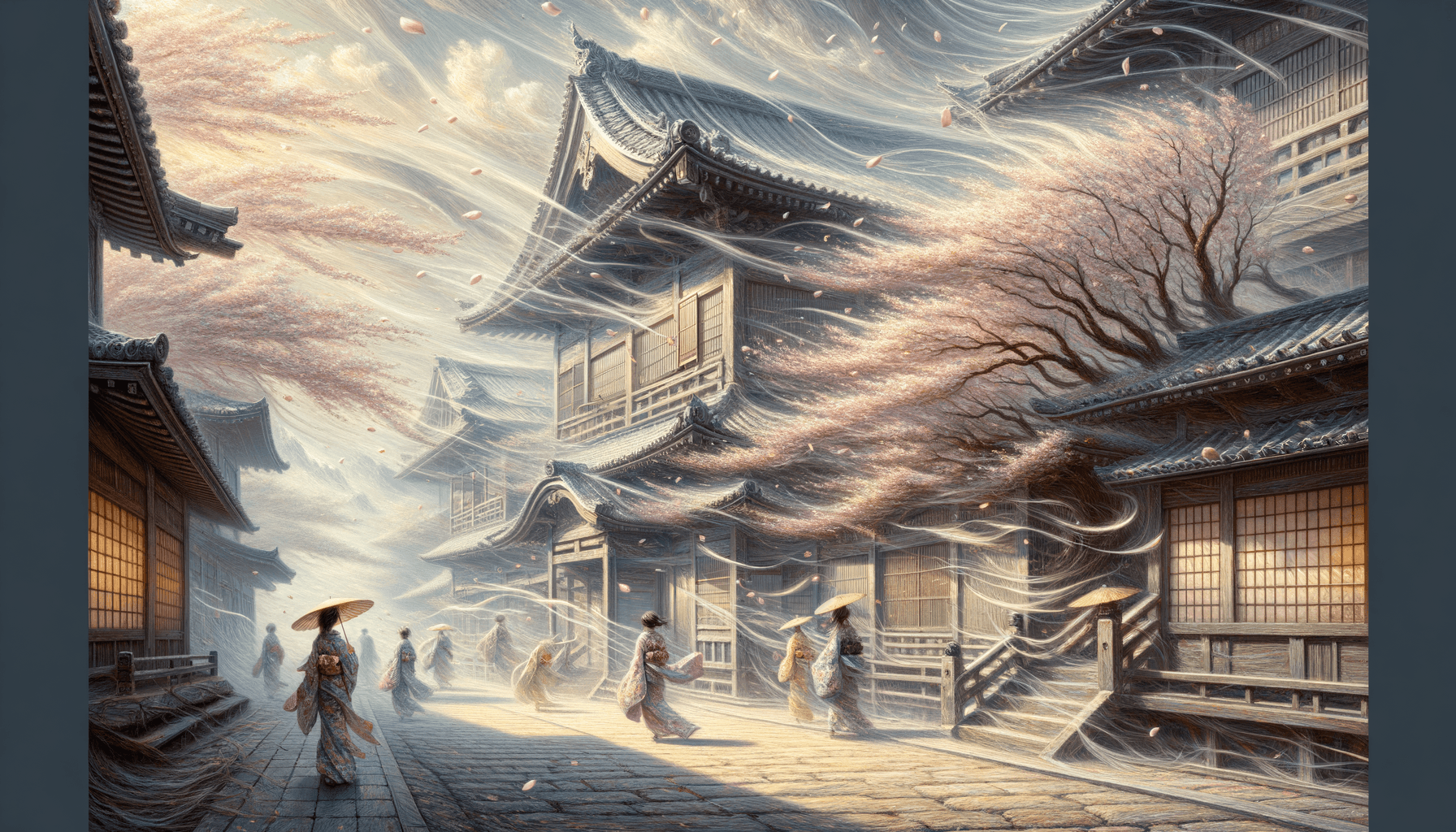
桜 の 葉 が 風 で 舞って います。sakura no ha ga kaze de matte imasu.
The cherry leaves are dancing in the wind.
Learn kaze and more in Japanese
All course content and exercises are completely free — no paywalls, no trial periods, no signup needed.
- ✓ Practice with interactive exercises
- ✓ Track your progress with spaced repetition
- ✓Learn at your own pace — completely free