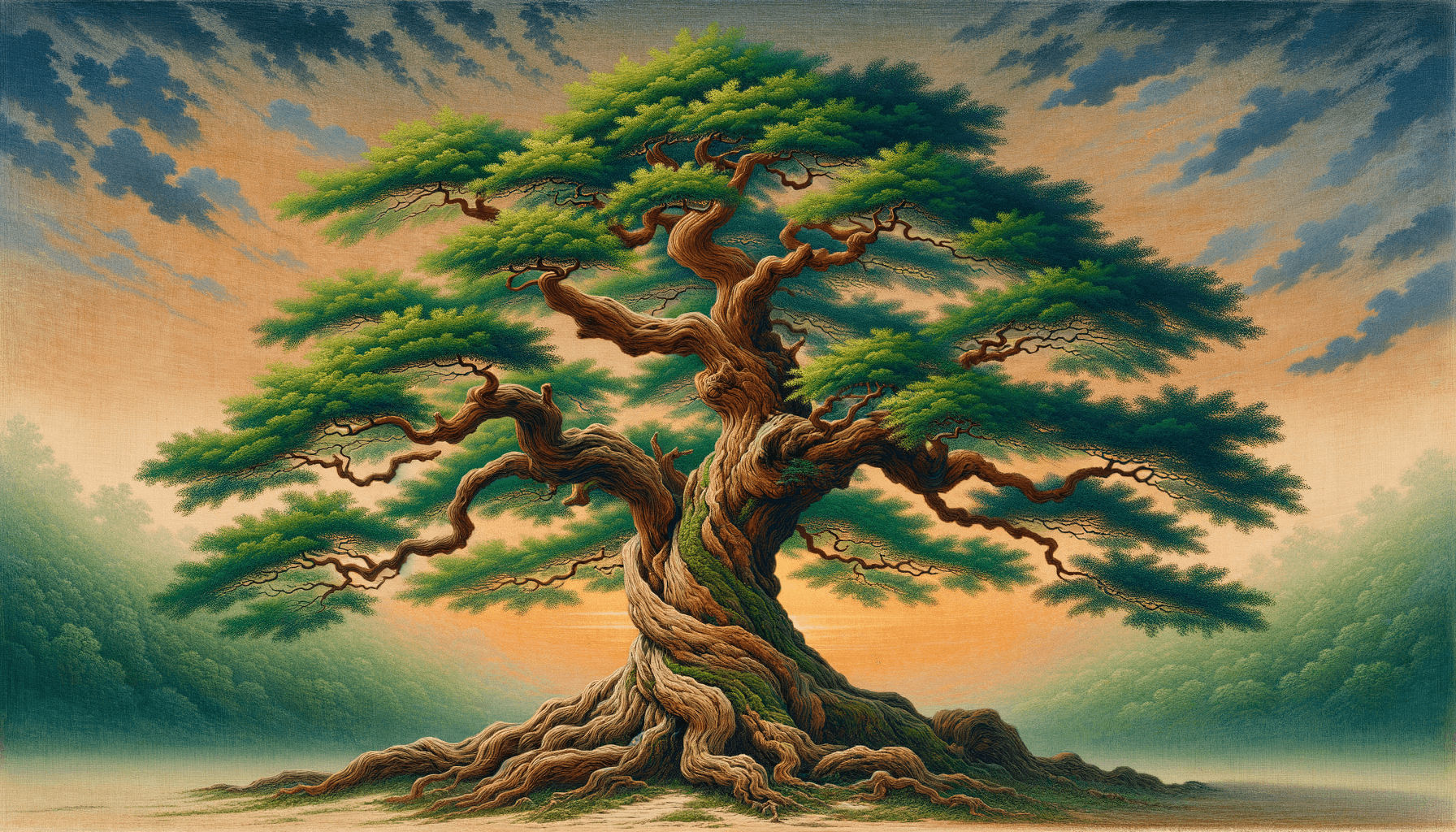
Breakdown of ki
tree; wood
木
Usages of ki
木 です。ki desu.
It's a tree.
それ は 大きい 木 です!sore wa ookii ki desu!
That is a big tree!
あそこ に 木 が あります。asoko ni ki ga arimasu.
There is a tree (over) there.
チンパンジー は 木 の 上 で 遊ぶの が 好き です。chinpanjii wa ki no ue de asobuno ga suki desu.
Chimpanzees like to play on trees.
先 の 木 の 下 に 鶏 が います。saki no ki no shita ni niwatori ga imasu.
There's a chicken under the tree ahead.
この テーブル は 木 で できて いる。kono teeburu wa ki de dekite iru.
This table is made of wood.
木々kigi
trees
彼 は ハンモック を 木 の 間 に 掛けました。kare wa hanmokku o ki no aida ni kakemashita.
He suspended the hammock between the trees.
その 薬 に は 木 の 皮 が 入って います。sono kusuri ni wa ki no kawa ga haitte imasu.
That medicine contains tree bark.
鹿 は 木 の 葉 や 草 を 食べます。shika wa ki no ha ya kusa o tabemasu.
Deer eat tree leaves and grass. (among other things)
木 の 葉 が 落ちる。ki no ha ga ochiru.
The leaves fall from the tree. (The tree leaves are falling.)
Learn ki and more in Japanese
All course content and exercises are completely free — no paywalls, no trial periods, no signup needed.
- ✓ Practice with interactive exercises
- ✓ Track your progress with spaced repetition
- ✓Learn at your own pace — completely free