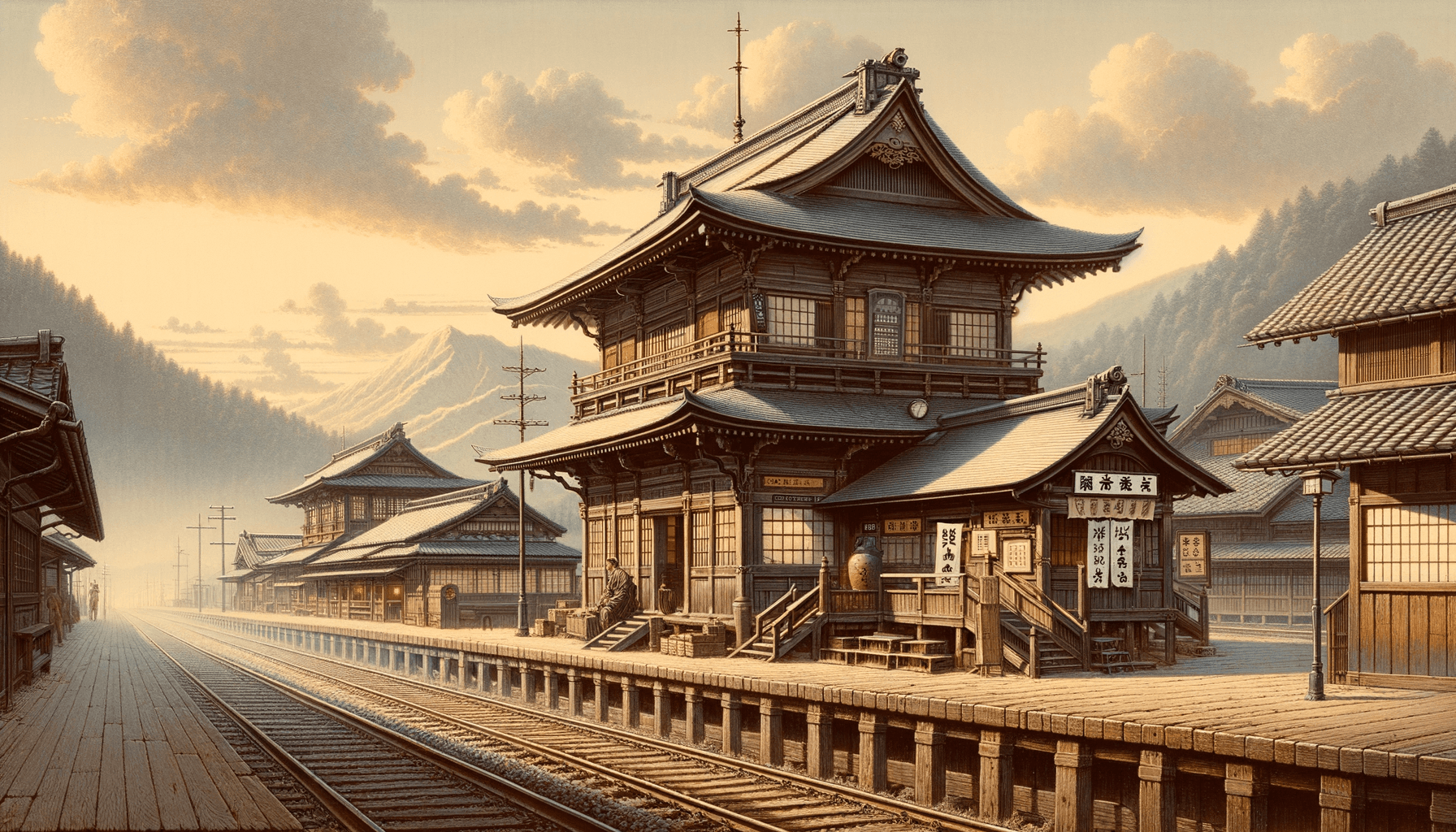
Usages of eki
列車 は 東京 駅 に 到着しました。ressha wa toukyou eki ni touchakushimashita.
The train has arrived at Tokyo station. formal
次 の 駅 で 降ります。tsugi no eki de orimasu.
I will get off at the next station.
地下鉄 の 駅 は どこ です か。chikatetsu no eki wa doko desu ka.
Where is the subway station?
駅 は どっち です か。eki wa dotchi desu ka.
Which way is the station?
どうやって 駅 に 行きます か。douyatte eki ni ikimasu ka.
How do I get to the station?
店 は 駅 の 先 に ある。mise wa eki no saki ni aru.
The shop is located past the station.
駅 の 辺 に カフェ が あります か。eki no hen ni kafe ga arimasu ka.
Is there a cafe around the station?
駅 に 着きました。eki ni tsukimashita.
I arrived at the station.
外国人 は 駅 で 道 を 聞いて いました。gaikokujin wa eki de michi o kiite imashita.
The foreigner was asking for directions at the station.
電車 が 出る まで に 駅 に 着きます。densha ga deru made ni eki ni tsukimasu.
I will have arrived at the station by the time the train leaves.
駅 の そば に 住んで います。eki no soba ni sunde imasu.
I live near the station.
駅 を 出たら、 右 に 曲がって ください。eki o detara, migi ni magatte kudasai.
When you leave the station, please turn right.
彼女 を 駅 まで 送りました。kanojo o eki made okurimashita.
I escorted her to the station.
彼女 を 車 で 駅 まで 送る 予定 です。kanojo o kuruma de eki made okuru yotei desu.
I plan to drive her to the station.
この 場所 は 駅 から 遠くて 不便 です。kono basho wa eki kara tookute fuben desu.
This location is inconvenient because it's far from the station.
駅 が 遠ければ、 タクシー を 使います。eki ga tookereba, takushii o tsukaimasu.
If the station is far, I'll use a taxi.
明日、 午後 三時 頃 に 駅 で 会いましょう。ashita, gogo sanji goro ni eki de aimashou.
Let's meet at the station around 3 p.m. tomorrow.
駅 で 無料 の 地図 を もらいました。eki de muryou no chizu o moraimashita.
I got a free map at the station.
駅 が 近くて 便利 で、 ここ に 住むこと に しました。eki ga chikakute benri de, koko ni sumukoto ni shimashita.
The station is close and convenient, so I decided to live here.
Learn eki and more in Japanese
All course content and exercises are completely free — no paywalls, no trial periods, no signup needed.
- ✓ Practice with interactive exercises
- ✓ Track your progress with spaced repetition
- ✓Learn at your own pace — completely free